
Engine oil is one of the most important fluids in a vehicle because it plays a major role in maintaining engine performance, efficiency, and durability. A car engine contains many moving parts that work together at high temperatures and speeds. Without proper lubrication, these components can experience friction, overheating, and damage.
Many car owners understand the importance of fuel but often ignore the role of engine oil. Regular oil checks and timely replacements are essential parts of vehicle maintenance. The right engine oil helps reduce wear, improve performance, control heat, and extend engine life.
Understanding how engine oil protects car engines allows vehicle owners to make better maintenance decisions and avoid expensive repairs.
Understanding the Role of Engine Oil
Engine oil is a specially designed lubricant that helps different engine components move smoothly. Inside an engine, parts such as pistons, bearings, and cylinders constantly move against each other.
Without lubrication, these parts create excessive friction, which can lead to heat buildup and damage.
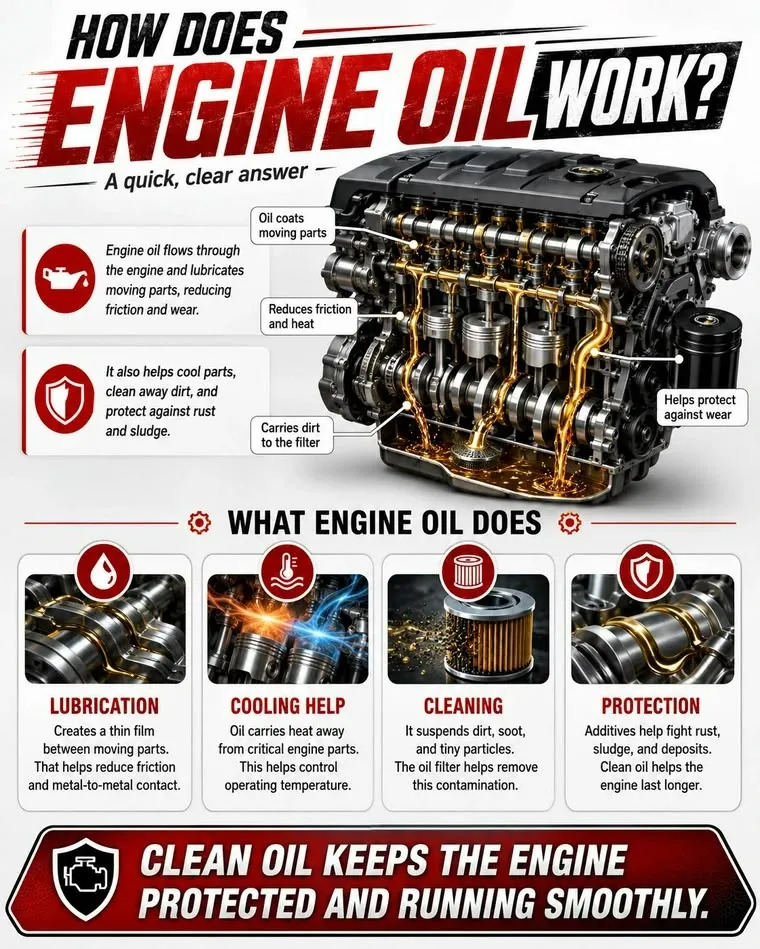
Engine oil creates a protective layer between moving components, allowing them to operate efficiently. It also helps remove impurities and supports overall engine cleanliness.
A properly lubricated engine performs better and experiences less stress during operation.
Reducing Friction Between Engine Parts
One of the primary functions of engine oil is reducing friction.
When metal components move against each other without proper lubrication, they can wear down quickly. This wear reduces engine efficiency and may eventually cause serious mechanical problems.
Engine oil forms a thin protective layer that minimizes direct contact between moving parts.
By reducing friction, engine oil helps the engine operate smoothly and improves the lifespan of important components.
Regular oil maintenance ensures that this protective layer remains effective.
Protecting Against Engine Wear
Engine parts experience significant pressure during operation. Over time, continuous movement can cause gradual wear if proper lubrication is not maintained.
High-quality engine oil contains additives that help protect engine components from damage.
These protective properties reduce the impact of daily driving conditions, including frequent stops, heavy loads, and long-distance travel.
Using the correct oil recommended for a vehicle helps maintain engine reliability and performance.
Controlling Engine Temperature
Car engines generate a large amount of heat while operating. Although the cooling system manages much of this heat, engine oil also plays an important role in temperature control.
Oil absorbs heat from engine components and helps distribute it, preventing excessive temperature buildup in certain areas.
Without proper oil circulation, some engine parts may become too hot, increasing the risk of damage.
Maintaining proper oil levels supports better heat management and engine protection.
Keeping the Engine Clean
Engine oil helps keep internal engine components clean by collecting dirt, dust, and small particles that can affect performance.
Over time, contaminants can build up inside an engine and reduce efficiency.
Modern engine oils contain cleaning agents that help prevent deposits and maintain cleaner engine surfaces.
However, old oil becomes less effective over time, which is why regular oil changes are necessary.
Clean engine components contribute to smoother operation and better performance.
Improving Fuel Efficiency
Proper engine lubrication can contribute to improved fuel efficiency.
When engine parts move smoothly with reduced friction, the engine requires less effort to operate.
Reduced internal resistance allows the vehicle to perform more efficiently, which may help optimize fuel consumption.
Although many factors affect fuel economy, including driving habits and vehicle condition, maintaining proper engine oil quality supports efficient engine operation.
Supporting Smooth Engine Performance
A well-lubricated engine generally provides smoother performance.
Engine oil helps maintain proper movement between components, reducing unnecessary noise and vibration.
When oil quality decreases, drivers may notice changes such as rough operation, unusual sounds, or reduced performance.
Regular maintenance helps ensure that the engine continues operating smoothly under different driving conditions.
Different Types of Engine Oil
Engine oils are available in different types designed for various vehicle requirements.
Conventional oil is commonly used in some vehicles and provides basic lubrication.
Synthetic oil is specially designed to offer improved performance, stability, and protection under extreme conditions.
Synthetic blend oils combine features of different oil types.
The correct choice depends on factors such as vehicle design, manufacturer recommendations, driving conditions, and climate.
Using unsuitable oil may affect engine performance and protection.
Importance of Choosing the Right Engine Oil
Every vehicle manufacturer recommends specific oil specifications for their engines.
Choosing the correct engine oil ensures proper lubrication and compatibility with engine components.
Using incorrect oil may reduce performance or fail to provide adequate protection.
Car owners should check their vehicle manual or follow professional maintenance advice when selecting engine oil.
The right oil helps maximize engine efficiency and durability.
Why Regular Oil Changes Are Important
Engine oil does not remain effective forever. Over time, heat, contaminants, and engine operation reduce its protective qualities.
Old oil becomes less efficient at reducing friction and cleaning engine components.
Regular oil changes remove degraded oil and replace it with fresh lubricant.
Following a proper oil change schedule helps prevent engine problems and maintains reliable performance.
Signs That Your Car May Need an Oil Change
Several signs may indicate that engine oil requires attention.
Drivers may notice warning lights, unusual engine sounds, reduced performance, or darker and thicker oil during inspection.
In some cases, poor lubrication can cause increased engine temperature or reduced efficiency.
Regular checks help identify oil-related issues before they become serious problems.
Preventive maintenance is usually less expensive than major engine repairs.
Impact of Driving Conditions on Engine Oil
Driving conditions can affect how frequently engine oil needs replacement.
Vehicles used for frequent short trips, heavy traffic, extreme temperatures, or heavy loads may require more attention.
Such conditions can increase stress on engine components and affect oil performance.
Understanding driving habits helps car owners maintain an appropriate maintenance schedule.
Common Engine Oil Maintenance Mistakes
Many vehicle owners make mistakes that can affect engine health.
One common mistake is delaying oil changes beyond the recommended period.
Another mistake is using low-quality or incorrect oil without considering vehicle requirements.
Ignoring oil levels can also lead to insufficient lubrication.
Regular checks and proper maintenance practices help avoid these problems.
How Engine Oil Supports Long-Term Engine Life
A well-maintained engine can provide better reliability and longer service life.
Engine oil protects important components, reduces damage, and supports efficient operation.
Although oil changes are a simple maintenance task, they have a major impact on vehicle health.
Consistent engine care helps prevent unexpected breakdowns and costly repairs.
Frequently Asked Questions (FAQs)
Why is engine oil important for cars?
Engine oil reduces friction, controls heat, cleans engine components, and protects against wear.
How often should engine oil be changed?
Oil change intervals depend on the vehicle model, oil type, and driving conditions. Vehicle manufacturer recommendations should be followed.
Can the wrong engine oil damage a car?
Yes, using incorrect engine oil may reduce protection and affect engine performance.
Conclusion
Engine oil is essential for maintaining car engine health and performance. It protects moving parts, reduces friction, controls temperature, improves efficiency, and helps prevent damage.
Regular oil checks and timely replacements are simple but important steps in vehicle maintenance. Choosing the right engine oil and following proper care practices can significantly improve engine reliability and extend vehicle life.
For every car owner, understanding the importance of engine oil is a key part of responsible vehicle ownership and long-term engine care.